
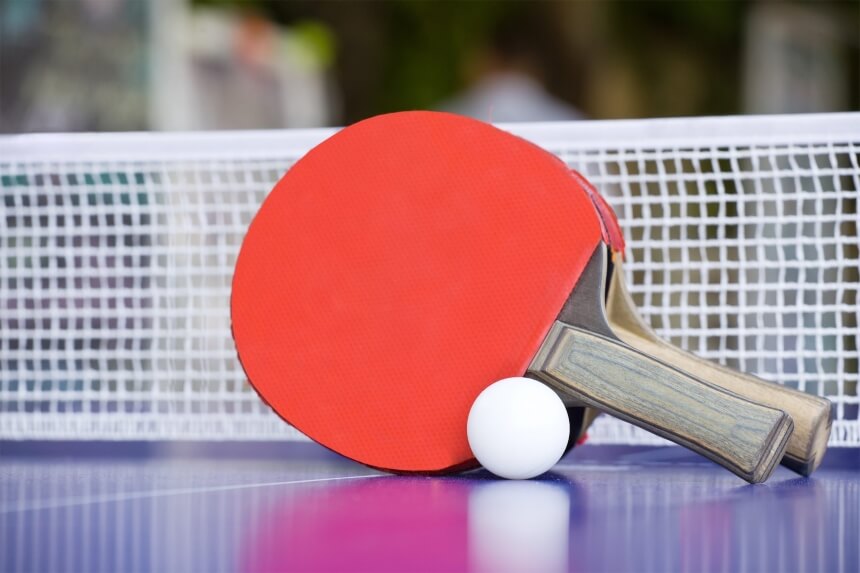
Table tennis is all about adjustments and inches. The best players are able to adapt to their opponent’s style and spin. Even beginners learn quickly to adjust their style and position to match their opponents’ favorite shots. As we become better players, we learn to choose our preferred grips, play styles, favorite serves, and the types of shots we want to play. There are many styles and variations, so every player, no matter how high up, can be unique. Before choosing ping pong paddles you should try it while playing table tennis.
Table tennis equipment can be made very customizable. There are many paddles that can be used to optimize your game once you move beyond the “hard paddle” in basements and rec rooms. As they learn the sport and improve their skills, most players will switch paddles several times.
It can be overwhelming to consider all the options between grip, rubber, and blade when you are ready to create your customized paddle.
Basics of Paddle
The core of a paddle is six pieces. The handle, the blade, a rubber forehand sponge, rubber and rubber are all core pieces of a paddle. You can choose from each of these pieces to make a paddle that suits your play style. Let’s take a look at how to choose the right paddle for you.
Step 1: Grip
The majority of players use a Shakehand grasp. There are some players who use a Penhold grip. A handle should be able to support your grip style.
You can choose between a Flared or Straight handle depending on your preference. The Flared handle is better for players who grip the paddle looser, while the Straight handle fits players with a more firm grip.
Step 2 Playstyle
The choice of paddle is ultimately personal. Each player is unique, and each paddle suits a different style.
How do you play? Do you have the ability to hit powerful shots and be an attacking player? Are you a defensive player who is skilled in placement, patience, and guile? Or are you a control-oriented player who places your shots strategically and moves your opponent to the side?
Take a few minutes to observe your playing style and preferences. Ask a friend, coach, or opponent to observe you and provide feedback on your tendencies and preferences.
Step 3: Picking a Blade
The most important part of your paddle is the blade. It determines the paddle’s power rating. A lighter, more rigid material will make a paddle more aggressive, while a heavier paddle made of softer materials will be more defensive.
A blade with five or more layers of material is best if you enjoy playing fast-paced games. Blades made of titanium carbon or rigid-but-light carbon fiber are best suited to your style.
All-wood blades are the best for defensive players. They absorb energy from the ball and slow down the pace to your liking.
Step 4: Picking your Rubber
If you are looking to play slow and defensive games, a tacky, soft rubber is the best. You’ll need a firmer rubber if you are playing an aggressive game. A higher tackiness will produce more spin.
Step 5: Picking Your Sponge
Sponges are a protective layer between the rubber and your blade. There are three types of sponges: thick, medium, and thin. A thick sponge is usually faster and more aggressive. The thicker sponge is preferred by defensive players.
To ensure that your game is supported, it’s crucial to choose the right ping pong paddles.
 Fun Game